
What is an electronic load?
An electronic load is the counterpart of a current source, i.e. a current sink. It is a device originally used as an intelligent replacement for a conventional (resistive) load resistor. Today, an electronic load replicates all imaginable types of loads.
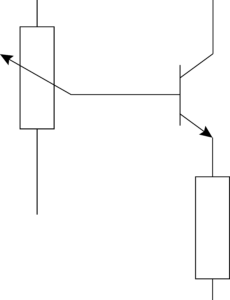
Whereas when loading a voltage source with a fixed resistor, one always sets a specific load current with a single resistor value. The special feature of the electronic load is that it can vary the load current within a defined range. It regulates the current electronically by means of transistors.
Customers use electronic loads in a wide variety of applications, especially for testing power supply and control units, batteries, fuel and solar cells, generators, transformers, uninterruptible power supplies (UPS), on-board power systems and many more.
In addition, H&H electronic loads have a considerable range of functions, which ensure convenient use. With functions such as MPP tracking, discharge function or internal resistance measurement, the devices perform complex processes for measurement and data storage automatically.
Analog and digital interfaces are essential for automated test stands, which electronic loads from Höcherl & Hackl usually provide as standard.